Most businesses don’t fail because their product is bad — they fail because people never discover them. Digital marketing changes that. It gives businesses the visibility, trust, and consistency they need to grow in a crowded market.
In this guide, you’ll learn what digital marketing really means today, why it matters, and how companies can use it to get measurable results.
What Digital Marketing Actually Means Today
Digital marketing is no longer just posting on social media or running ads. It is a complete system built to attract the right audience, earn their trust, and convert them into paying customers.
It includes search visibility, content, user experience, and data-driven decision making.
When done correctly, it becomes a growth engine — not an expense.
Why Digital Marketing Matters for Every Business
Consumers search before they buy. They compare brands before choosing.
If you’re not visible, trustworthy, and consistent online, you lose customers to competitors who are.
A strong digital presence helps you:
- Get discovered by people who are ready to buy
- Build trust without heavy advertising
- Convert traffic into real revenue
- Stay ahead of competitors who rely on outdated methods
Digital marketing works because it meets the customer exactly where they already are: online.
Key Areas of Digital Marketing That Drive Growth
1. Search Engine Optimization (SEO)
SEO helps your website rank for search terms your customers use.
When your pages appear at the top of Google, you earn targeted traffic that converts.
Strong SEO includes:
- Technical improvements for speed and structure
- On-page optimization
- High-quality content
- Trusted backlinks
- Local visibility for nearby customers
Organic traffic becomes long-term growth without paying for ads.
2. Content Marketing
Customers buy from brands that teach, guide, and solve their problems.
Content does exactly that.
Examples include:
- Blog articles
- Guides
- Service pages
- Case studies
- Product descriptions
Good content increases trust, builds authority, and supports SEO.
3. Social Media Marketing
Social media allows businesses to stay in front of their audience daily.
With the right approach, it creates community, credibility, and brand recall.
It works best when paired with:
- Consistent posting
- Clear positioning
- Valuable content
- Engagement with followers
Social platforms amplify your message, but strategy keeps it effective.
4. Paid Advertising (PPC)
Paid ads deliver fast visibility for businesses that need immediate results.
When combined with strong landing pages, PPC becomes a powerful revenue driver.
It is most effective when:
- Keywords are targeted
- Ads match search intent
- Budgets are optimized
- Conversions are tracked
Paid ads are a boost, not a permanent dependency. The goal is long-term organic visibility.
5. Email & Retention Marketing
Most users visit once and leave.
Email helps bring them back.
It improves:
- Customer loyalty
- Repeat purchases
- Long-term brand relationships
Retention is often more profitable than constant new customer acquisition.
Common Marketing Problems Businesses Face
Many business owners struggle because they rely on guesswork.
They try posting more, running ads, or hiring random freelancers — but results stay the same.
Typical challenges include:
- Poor website structure
- Low visibility on Google
- No clear messaging
- Weak content
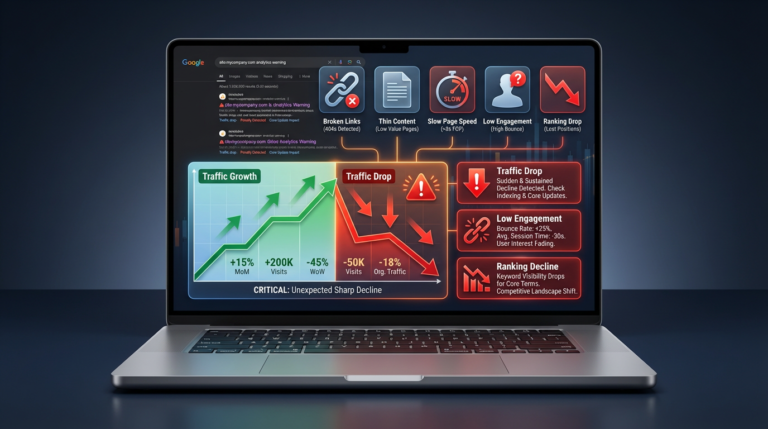
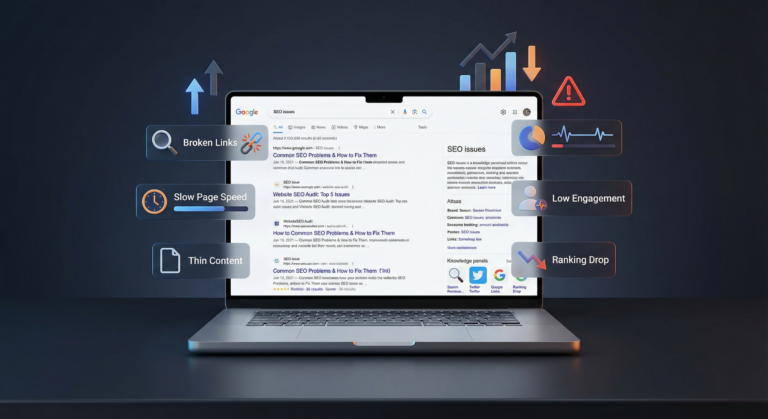
- Slow pages and technical issues
- Untracked marketing performance
These are not “marketing failures.”
They are system failures — and systems can be fixed.
How a Strong Digital Strategy Fixes These Problems
A proper marketing strategy focuses on:
- Understanding your audience
- Solving their problems
- Giving them a clear reason to choose you
- Building a digital presence that works 24/7
- Tracking what matters and improving over time
When the foundation is strong, growth becomes predictable.
Final Thoughts
Digital marketing is not one service — it is a complete path to business growth.
Companies that invest in visibility, trust, and a long-term strategy consistently outperform those who rely on random tactics.
When your website is optimized, your content delivers value, and your brand communicates clearly, customers naturally choose you.